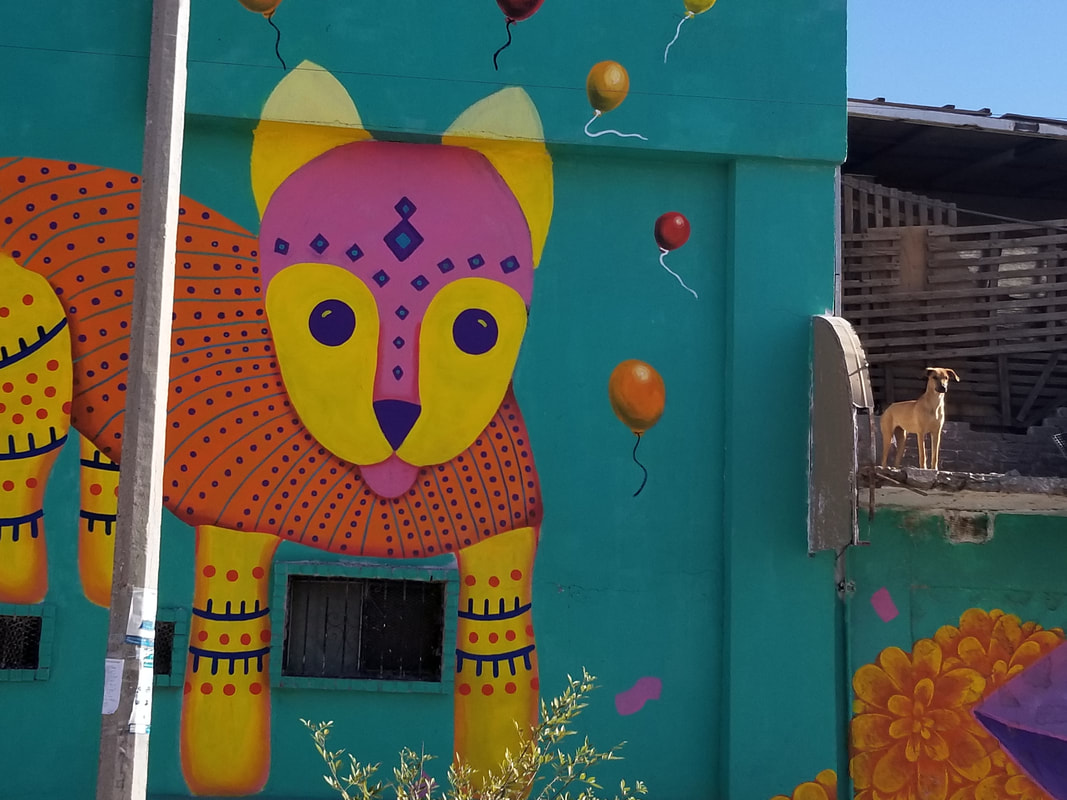
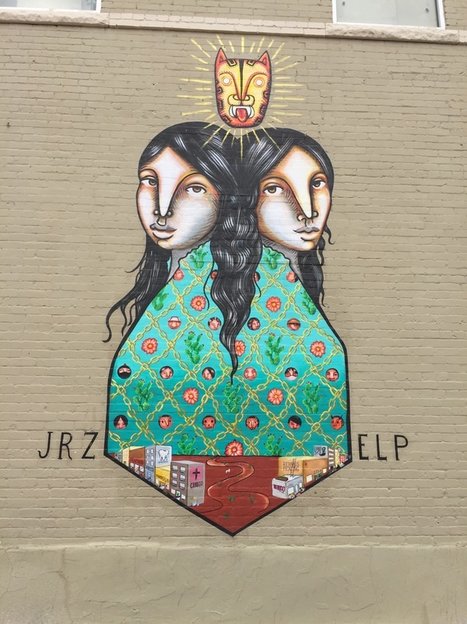
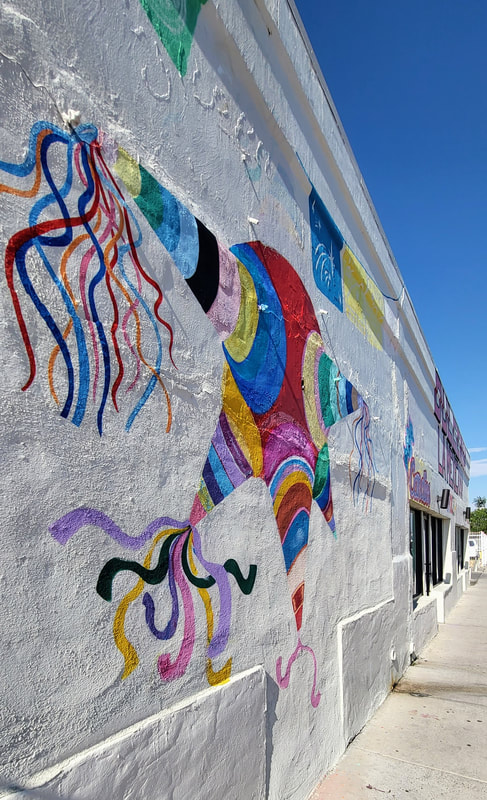
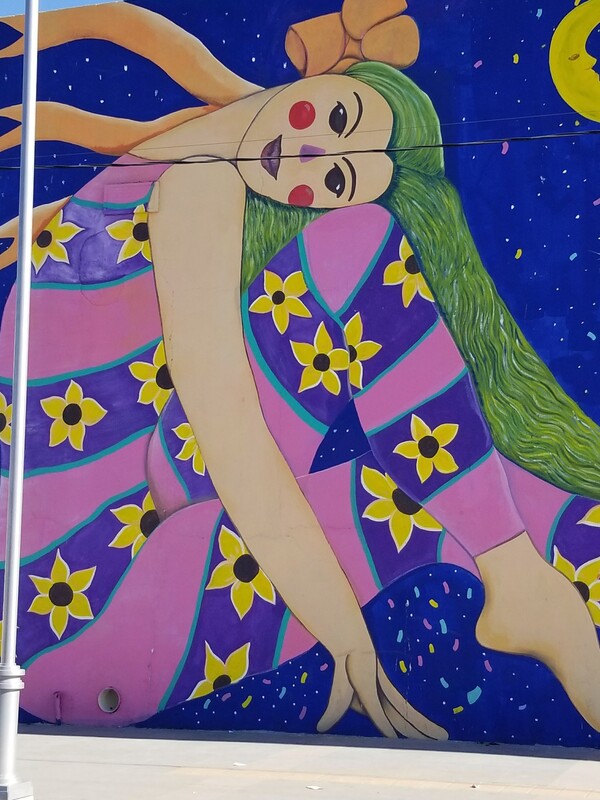
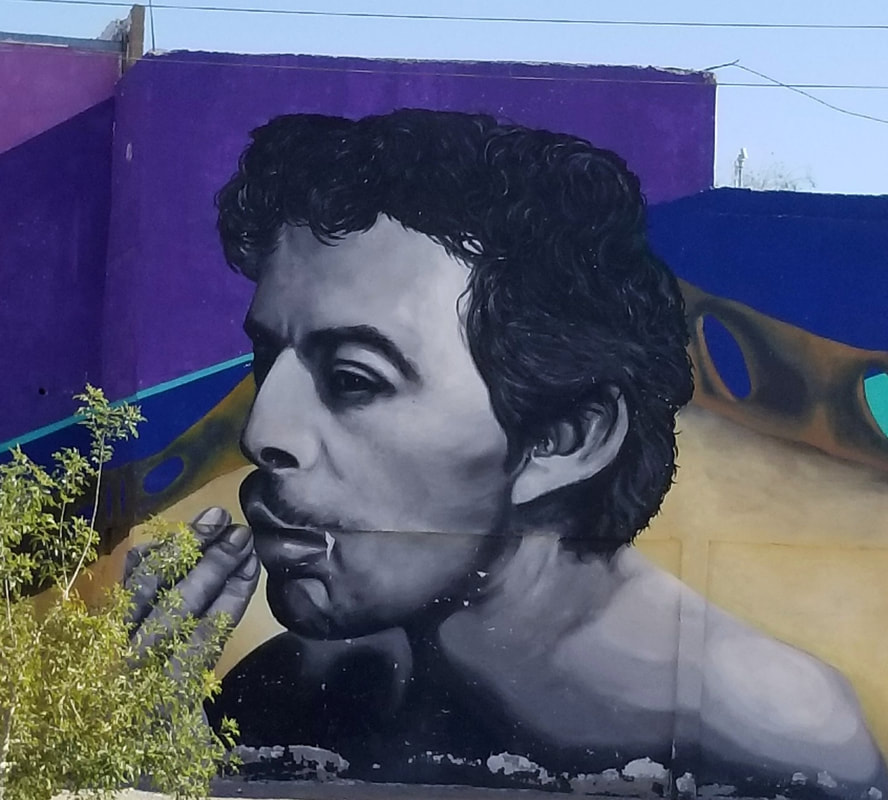
Sister Cities/ Ciudades Hermanas by Los Dos (Photo by Michelle E. Carreon) Yo soy fronteriza/ I am of the border. I know that I am and always will exist on both sides of the dividing line. I have lived on the U.S. side for over sixty years and for an equal amount of time, mi cuatita/ my twin sister Elisa has laid buried in an unmarked grave in the municipal cemetery in Ciudad Juárez. Identical twins cleaved from the same egg, nourished in the same womb, and brought into the world together, we have mirrored each other our entire existence. Death/life. Juárez/El Paso. Newborn/ elder. For most of my life, I expected my sister to find me. Every time there was a knock at my door, I thought it could be her. In my twenties and thirties, I daydreamed that one day I would find her while I walked down the streets of El Paso or Juárez. I knew that I would recognize her because I would see my own face reflected in hers. I knew since I could first understand words that she had died as a baby, but I couldn’t believe it. I was always searching for my other half. Elisa and I were born in the mid fifties to a teen-aged mother, Lupe, in a small clinic in Ciudad Juárez. It was one-floor square building that epitomized the 1950s “modern” look. I remember it sat on a small street surrounded by Chinese Elm trees. It was painted white. Or that is what I remember from my childhood visits to Juárez. Elisa and I were born prematurely at two pounds each. I don’t know if the idea of having two tiny babies who weren’t expected to live was too much for Lupe or if her suffering depleted her of her maternal connection to us. From the beginning, our future held so many possibilities that I often wonder what would I be now if my life had taken one of the different paths that opened when I was born. Lupe could have kept us and had we survived, we would have been raised by a single mother who had survived a traumatic childhood of abuse. I learned as an adult that her father had been so abusive to her and her mother that she stopped using his last name in order to sever any connection to him. She couldn't even bear to have his name. The doctor who delivered us asked Lupe to give one of us to him in payment for the C-section he performed on her. I always wondered if he wanted a daughter to raise as his own or if he wanted a criada, a child to raise as a servant, a custom going back to the colonial period in New Spain. Instead, Lupe asked her great aunt and uncle to adopt us. They said yes but only to one of us. My adoptive mother, who had experienced nine miscarriages and longed for children more than anything else, couldn’t bear the thought of taking someone’s children away. So she agreed to take one of us and leave the second with Lupe. She chose me, she said, because I had more life in my eyes. Elisa went to our grandmother in Juárez, Cruz. My abuela Cruz lived in a small house on the periphery of Juárez. I remember driving there with my mama and daddy when I was five. Like a dream, I remember sitting in the back of my daddy's car driving along dirt roads smelling the creosote and watching the mountains in the distance. This is where Elisa spent her short life. Elisa died at about a month old from gastroenteritis, one of the major killers of poor children worldwide. In my forties, I found her death certificate in the civil records office in Ciudad Juárez and finally knew what had happened to her. In El Paso, my great aunt and uncle became my mama and daddy. My mama barely slept for weeks, sitting next to my crib day and night making sure I lived through the night. At first, I was so tiny that they put me to sleep in a shoebox. My godmother made miniature shirts for me to wear. There weren’t any photos of me until I was six months old because they were so afraid I would die that they didn’t think to document my early months. By six months, I was a fat happy baby smiling into the camera, held in my daddy’s or mama’s arms. They beamed, holding their daughter who had lived. That was my beginning. There is a mural in El Paso on Father Rahm Street in El Segundo Barrio, one of the most historically significant Mexican American barrios in the United States. Named “Sister Cities/ Ciudades Hermanas,” it opened my heart as soon as I saw it. Created by Los Dos, talented artists Ramon and Christian Cardenas, the mural pays homage to El Paso and Juárez, The mural’s sisters, their braids entwined like the DNA that my sister and I share, reminds me of this beginning, of being fronterizas in life and death. Sometimes in the evenings, I look southward across the now-dry river to see the lights of Juárez. I think of my sister, my other half, buried in the soil of the Chihuahuan desert, and I remember that I am of the border. And that to survive on the border I must be fierce.
1 Comment
Manuel
11/6/2024 03:17:04 pm
I promised Great Odunga to always post his testimony and I really want to say "Thank You" to everyone who supported me through the years. My name is Manuel Franco, New Berlin, Wisconsin. My story of how I won the Powerball lottery of $768.4M is a bit of a tale. I was feeling very lucky that day because I had contacted Great Odunga to help me with the winning Powerball numbers. I really had that great great feeling that I looked at the camera wanting to wink at it. I only did a tiny part of it when he told me he would give me the numbers and trusted him. He gave me the numbers after I played a couple other tickets along with it for $10. I checked my ticket after the winnings came online and saw the numbers were correct including the Power play. I screamed for about 10 minutes because it felt like a dream coming into reality. I had won $768.4M. Thank you Great Odunga. Well, his email is [email protected] and [email protected] You can also call or Whats-app him at +2348167159012 so you guys can contact him
Reply
Leave a Reply. |